
A roofing client got two years’ worth of business in a single month in 2024 — all thanks to one page that had been live since January. By the fourth month, the calls started coming in. Can you guess what the page could have been?

A “tornado roof repair” page that started ranking #1 during the tornado that hit their city.
That’s seasonal SEO for you.
I spent five years managing content campaigns for more than 30 local service businesses. So when I tell you it’s worth investing in seasonal content, it comes from real-life experience and results. Follow along as I walk you through:
WTF Is Seasonal SEO, Anyway?
Seasonal SEO is the practice of adjusting your website content and keywords to match the moments when your customers are actually searching. In New Orleans, these search windows are typically tied to hurricane season, Mardi Gras, termite swarms, and thunderstorms. To plan a seasonal SEO strategy, you first need to find relevant seasonal keywords. Then, you create content or website pages to match these keywords.
What Are Seasonal Keywords?
Seasonal keywords are search terms that explode during a particular time of the year. These terms are usually linked to events, holidays, and even seasonal weather.
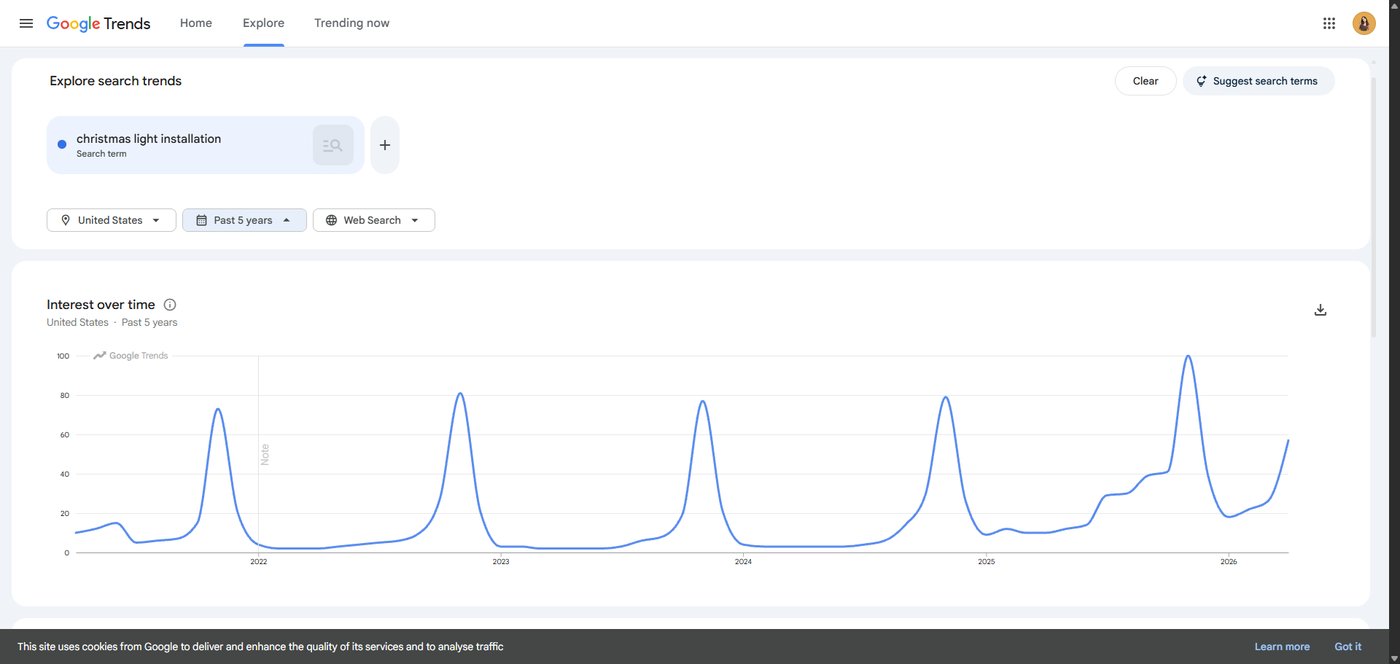
One of the best examples of a seasonal keyword is “Christmas light installation.” You can see in the Google Trends graph below how the keyword picks up every October, peaks in November, and drops off a cliff by December. This seasonal keyword follows a consistent trend across five years of search data.
How Can I Find Seasonal Keywords?
I’m going to let you in on a secret: You don’t need an expensive tech stack to find seasonal keywords. The tools and resources below are free and easy to use.
Google Trends
My favorite tool for seasonal keyword research. Free, no login. Type your keyword, set your country, filter to your region. You’ll see when the spikes happen, plus a list of related terms.
Weather Forecasts
I check these more than I’d like to admit. Knowing what storm is coming tells you what kind of damage to expect and what people will search for if they’re impacted by it.
Your Own Business Data
My personal favorite. Listen to sales calls, dig through lead forms, look at past jobs. There’s almost always a pattern — and a hidden service customers are already asking for.
Keyword Research Tools
SEMrush, Ahrefs, or AlsoAsked. Combine your service plus your area. Google’s autocomplete and “People Also Ask” are surprisingly useful starting points, too.
How To Use Seasonal SEO as a Local Business in New Orleans
New Orleans runs on seasons. The city sees 19 million visitors annually, and most of them arrive around a specific event, holiday season, or festive time of year. For a local business like yours, that’s a potential goldmine of opportunities. Here’s how you can best prepare your website for these seasonal shifts in search.

1. SEO for the Holidays
One of the things I like about SEO for holidays is its predictability. You know when it will arrive, what services people will be searching for, and how to make sure you get picked when that happens.
For example, people are looking for “Christmas light installation” in November, “catering for Thanksgiving” in October, and “HVAC tune-ups” before the winter chill starts in December. If you run a local service business in New Orleans, each of these is a search window.
To catch these search windows, you need to create the pages at least 60 days prior. Google needs time to crawl, index, and decide your page is worth ranking. That process doesn’t happen overnight, and it definitely doesn’t happen in the two weeks before Christmas.
Christmas is the holiday I’d start with. Let’s say you’re an electrician or lighting contractor. Search interest for Christmas-related lighting services builds from August and peaks in November, well before the holiday itself. By December, most people have already booked someone. If your Christmas light installation page goes live in November or December, you, my friend, are already behind.
Seasonal Keyword Example
For a New Orleans-based electrician or lighting contractor
Here are the kinds of Christmas keywords worth targeting:
“Christmas light installation New Orleans”
“Christmas light installation Metairie”
“Outdoor Christmas light installers Uptown”
If someone in Metairie is searching for holiday lights and your page says “New Orleans,” you’re already losing to the guy down the street who got specific. The more location-specific service area pages you have, the better.
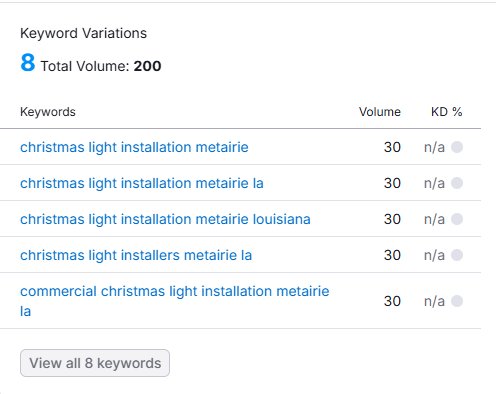
I have used Semrush here to find these keywords. You can enter terms related to your business or services, and get relevant keywords that people are actively searching for. It also shows the keyword volume and keyword difficulty — aka how many searches per month and how hard it is to rank relatively.
2. SEO for Seasonal Weather
Buffalo gets hit by snowstorms every winter. Blizzards freeze gutters, bury driveways, and cut people off from their daily routines almost overnight. One gutter cleaning company saw the opportunity and did something smart.
Since it was the off-season for them and business was slow, it was the perfect time to add snow removal to their services. They created pages around the keywords, got them live before winter, and right around the corner, they started promoting on Facebook and with Google Ads. Calls nearly doubled compared to their normal winter days.
I call that hitting a touchdown when the opportunity calls.
As a local home service business in New Orleans, the weather determines the biggest paychecks. Especially for roofing companies, HVAC contractors, gutter cleaners, plumbers, and water damage specialists.
I prefer creating content around hurricane season in March or April. So when the season starts on June 1 and runs through November 30, that content is already ranking, and the calls start coming in.
I’m covering the full storm-season content strategy in more depth in a later post. Bookmark this article or the website so you can come back to it.
Seasonal Keyword Example
For a roofing or storm damage business in New Orleans
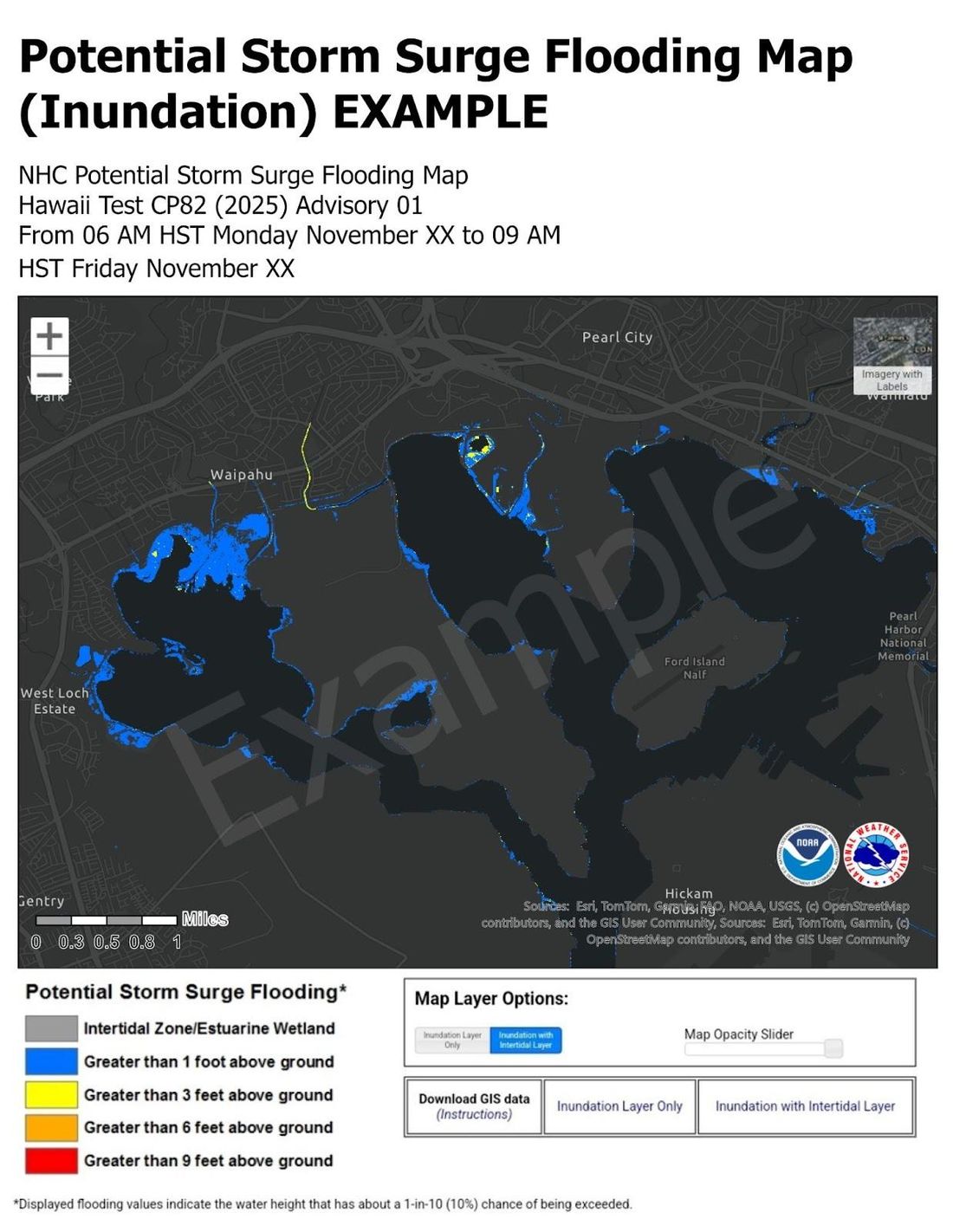
Start with the National Oceanic and Atmospheric Administration (NOAA) hurricane season forecast. It’s published every May and tells you how active the season is expected to be. Open Google Trends alongside it, type in your target keyword, and set the region to Louisiana. The spikes track almost exactly with active storm years.
“hurricane roof repair New Orleans”
“hurricane roof damage Louisiana”
Specific, local, and exactly what someone searches for the morning after a storm passes.
3. SEO for Local Events
97% of shoppers read reviews online before they step out to shop. They want to make sure they’re not wasting time or money, so they research first and then decide where to go. Small Business Saturday in November is one of those moments when online research peaks.
If you run a boutique, cafe, or retail shop in the French Quarter or along Magazine Street, start creating content about Small Business Saturday New Orleans 2026 early. Write about what to do, where to shop, and what makes your neighborhood worth visiting. Genuinely inform your reader while naturally weaving in your business. That combination of useful content and local specificity is what gets you found and walked into.
And then the biggest event for the state, aka Mardi Gras…
Carnival season runs from King’s Day in early January all the way through to Ash Wednesday. That’s nearly two full months of people searching for parade routes, krewe schedules, where to watch with kids, and where to find the best king cake on Magazine Street.
Seasonal Keyword Example
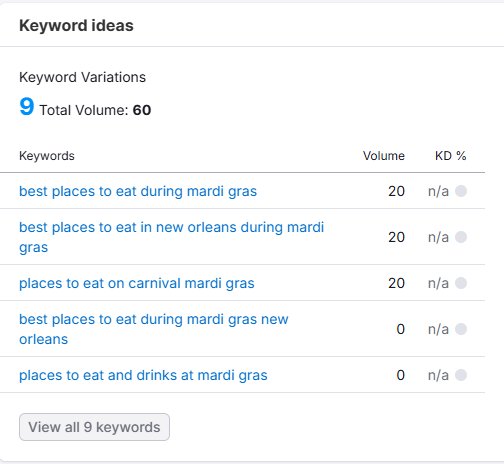
Finding a Mardi Gras keyword with Google Trends
Type in “Mardi Gras parade routes” and set the region to Louisiana. You’ll see search interest climb steadily from late December, peaking in the two weeks leading up to Mardi Gras Day. That’s your search window — which means your content needs to be live by November at the latest.
“best places to eat during Mardi Gras”
“Mardi Gras parade schedule 2026”
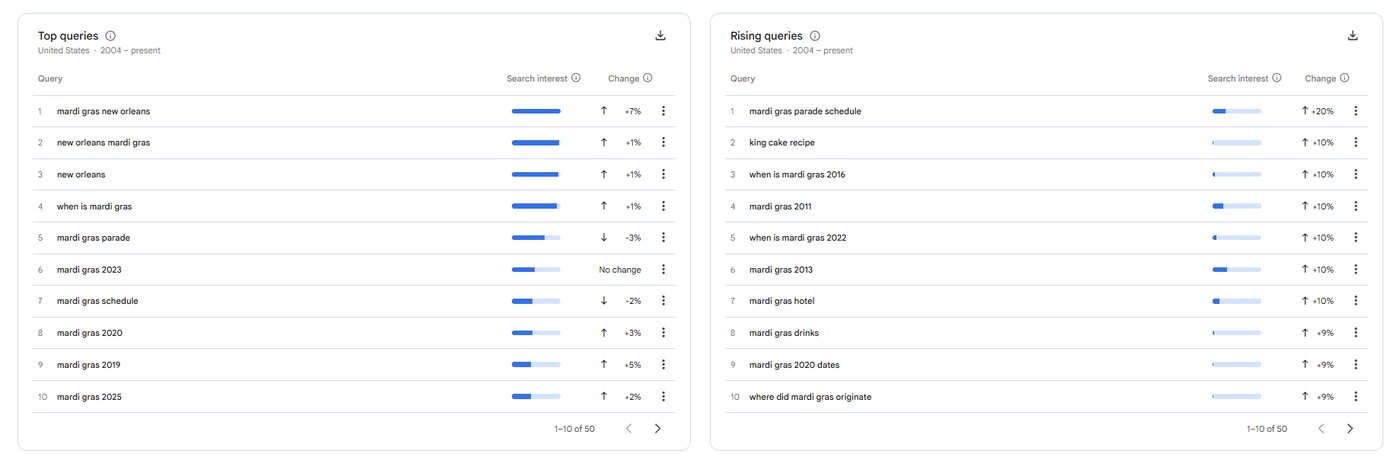
For a restaurant or tour company in New Orleans, target keywords that combine the event with your specific service. Mardi Gras + your specialty = a hyper-targeted search window your competitors probably aren’t optimizing for.
Seasonal SEO Tips for Local Businesses
I know you’re excited to start implementing what we learned, but hold on. Read these tips because they’ll save you a lot of trouble redirecting a page or rewriting the content down the line.
- Publish earlier than you think you need to. Content takes time to be indexed and ranked. If your target season starts in October, you need that page live by July or August. People start searching for Halloween services in late July and August, and Christmas services in November. You need two months to get these pages ready to convert.
- Create evergreen-seasonal content. Build pages you only need to refresh once a year. You don’t want to keep writing new content every year for a new page. For example, “How to Prepare Your Home for Hurricane Season in New Orleans” works every season with minor updates.
- Don’t put dates in your URLs. A URL like “/roof-repair-spring-2026” becomes a liability the moment the year changes. Keep it clean with “/spring-roof-repair-new-orleans”. That page can rank year after year without needing to be recreated.
Get Ahead on Seasonal Sales in New Orleans
Many local businesses in New Orleans use seasonal marketing to drive traffic, footfall, and sales. And with rising competition, you need this first-mover advantage more than ever.

Get ahead of seasonal SEO before your competitors do.
You don’t need to figure it out alone. The team at WTF SEO can help you with a customized SEO campaign to capture every seasonal shift in search. We’re one call away.
| BrightLocal |
“Local Consumer Review Survey 2024.” BrightLocal, www.brightlocal.com/research/local-consumer-review-survey. Accessed 27 Apr. 2026. |
| NOAA |
“National Hurricane Center to Issue New Forecast Cone Graphics for 2026 Hurricane Season.” National Oceanic and Atmospheric Administration, www.noaa.gov/news-release/national-hurricane-center-to-issue-new-forecast-cone-graphics-for-2026-hurricane-season. Accessed 27 Apr. 2026. |
| NewOrleans.com |
“New Orleans Reaches Tourism Milestone: 19 Million Visitors for the First Time Since COVID.” NewOrleans.com, www.neworleans.com/articles/post/new-orleans-reaches-tourism-milestone-19-million-visitors-for-the-first-time-since-covid. Accessed 27 Apr. 2026. |